
Blog2026-07-16
Water-based formulations and the pressure on solvent sprays
Why solvent-heavy surface sprays are under pressure in Europe, and how water-based formulations carry oily actives in a formula that is mostly water.
Affix Labs
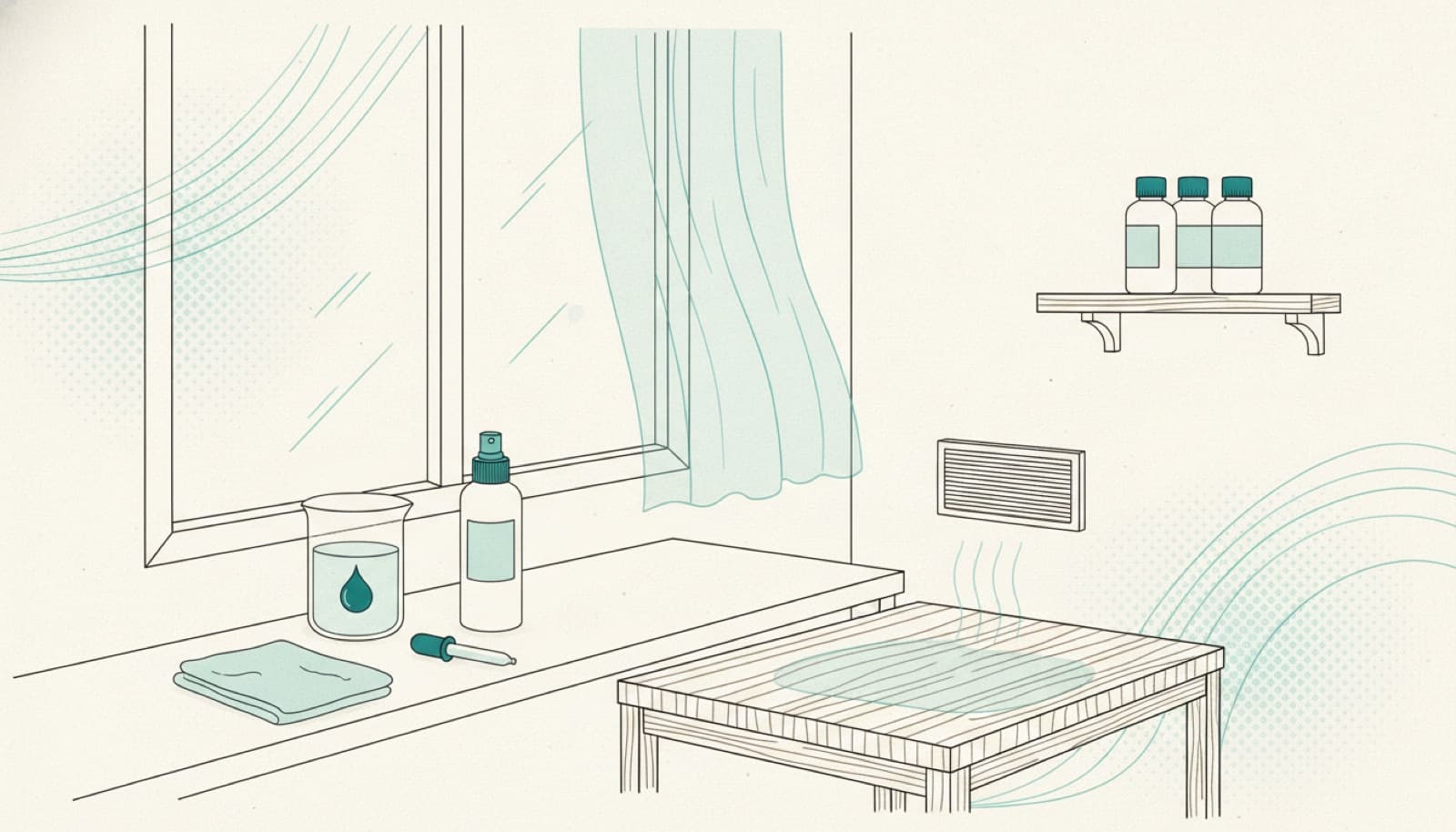
Many surface sprays are built on a solvent or an alcohol, because the active substances that do the work are oily and do not mix with water. In Europe that model is under pressure from three sides: emission rules, indoor air and the people who spray for a living.
Why surface sprays were built on solvents
Repellents, fragrances and many pesticides share a practical problem. They are oily compounds, and stirred into water they separate out again.
The usual answer is to dissolve the active in an organic solvent or an alcohol, such as ethanol or isopropanol, and spray the solution. As the spray dries, the solvent evaporates into the room and the active stays behind on the surface.
That carrier brings obligations of its own. Ethanol and isopropanol are classified under the EU CLP Regulation as highly flammable liquids, which shapes how a product is labelled, stored and shipped.
What Europe's VOC rules actually cover
There is no single EU definition of a volatile organic compound. The paints directive (2004/42/EC) uses a boiling point of 250 °C or lower. The Industrial Emissions Directive (2010/75/EU) uses a vapour pressure of 0.01 kPa or more at 20 °C.
The paints directive caps the VOC content of decorative paints, varnishes and vehicle refinishing products. Surface insect sprays are not on that list, but they still count.
The National Emission reduction Commitments Directive (EU) 2016/2284 gives every member state a reduction commitment for non-methane VOC emissions, with stricter commitments from 2030. These compounds help form ground-level ozone in summer sunlight. National inventories report the solvents released from household products as a category of their own, next to paints and industry.
For a brand owner, the solvent in each bottle is part of a national total that governments have committed to bring down.
Indoor air and workplace exposure
European Commission research puts the share of time Europeans spend indoors at around 90%. What a product releases into a room has become a buying question.
France has required construction and decoration products to carry an emissions label since 2012, graded from A+ to C. Germany assesses the indoor emissions of building products through the AgBB scheme. Neither covers insect sprays, but both have taught building owners and facility managers to ask what a product gives off indoors.
The workplace adds a legal duty. Under the Chemical Agents Directive (98/24/EC), employers assess the risks of hazardous chemical agents, and substitution comes first: replacing an agent or process with one that is not hazardous, or less hazardous, under the conditions of use.
For a housekeeping or cleaning team that treats rooms every day, the carrier is part of that assessment, not only the active.
How a water-based formulation carries an oily active
Affix Labs developed a method to dissolve oily compounds in water. It is protected by Dutch patent NL2032600, Composition for dissolving an oily compound in water, granted in 2024, with international applications filed.
A surfactant forms micelle-like structures around the oily molecules, and a co-solvent helps keep them evenly dispersed. Water is the largest component, at more than 70% of the formula.
Once sprayed, the water evaporates and a coating remains on the surface.
Repeltec is the first product built on the platform.
What this changes for a formulator or brand owner:
- The bulk of the bottle is water, not an organic solvent or an alcohol.
- The active is held in a coating that releases it gradually, instead of lying bare on the surface.
- The method works with a range of oily actives, including repellents, fragrances and pesticides.
- One platform can carry several products, including white-label ranges.
Water-based formulations and what buyers should ask
A water base describes composition. It is not a safety statement, and it does not replace the label.
Three questions help when comparing surface sprays. What carries the active, and how much of the formula is it? What leaves the surface as it dries? How often does the surface need treating again?
The last question is where controlled release earns its place.
The technology page explains the coating and the patent in more detail. Brands and distributors who want to build on the platform will find the next step on the partners page.
Use biocides safely. Always read the label and product information before use.