
Blog2026-10-08
Pest control file: recording a repellent for BRCGS and IFS
What BRCGS and IFS auditors expect in the pest control file, and how a contractor records a repellent treatment: site plan, margins and report fields.
Affix Labs
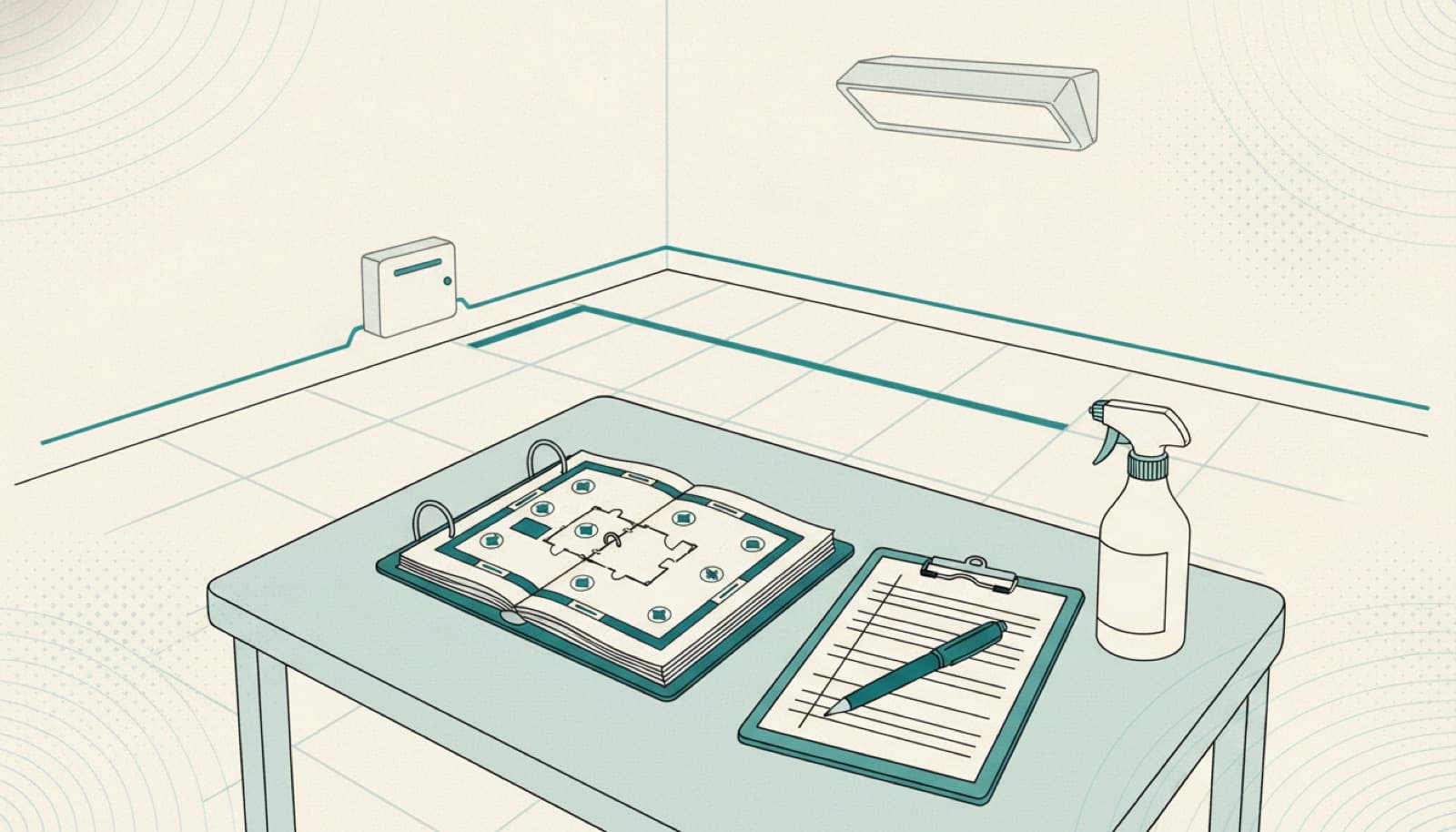
At a BRCGS or IFS audit, the pest control file is where the auditor checks whether the programme on paper matches the site. A repellent surface treatment belongs in that file in the same way as a bait point or a monitor: in the scope, on the plan and on every service report.
What auditors look for in the pest control file
BRCGS Food Safety Issue 9 asks for pest management documentation that is kept up to date (section 4.14). At a minimum it covers a current plan of the full site with every pest control device and its location, the identification of baits and monitors, the responsibilities of the site and the contractor, the products used with instructions for effective use and for emergencies, observed pest activity, and the treatments carried out.
IFS Food version 8 covers similar ground in section 4.13. Its risk-based measures include a site plan with the area for application, the identification of baits, in-house and external responsibilities, the agents used with their instructions for use and safety, and the frequency of inspections.
Where the service is outsourced, IFS expects these points in the service contract. A competent person at the food company monitors the pest control activities, and the responsibility stays with the company.
Both standards also look at trends. BRCGS asks for an in-depth assessment by a pest management expert, at a frequency based on risk and at least once a year, and for inspection results to be analysed for trends. IFS asks for the effectiveness of the measures to be monitored, including trend analysis.
Put the treatment in the scope of service first
An auditor reading the service reports will notice a product that no contract or procedure covers. Before the first application, add the repellent treatment to the contractor's scope of service, or to the service contract on an IFS site.
Describe the product in plain terms. Then write down which zones it covers and who on site agrees each application.
Check that the product is on the site's approved chemical list and that the work fits the cleaning schedule and the HACCP plan. The technical or quality manager signs it off, like any other change to the programme.
Treated zones on the site plan
Draw the treated zones on the same site plan as the bait and monitoring points, with their own symbol and a zone reference. Keep a clear margin around every bait station, monitor and insect light trap, and around the surface each one is mounted on.
The reason is practical. A monitor is there to show where insects move, and a repellent beside it changes that movement, so the catch no longer describes the site. A bait only works if insects reach it.
When zones change, update the plan, sign and date it, and keep the old version. On each service report, note which monitors sit next to a treated zone, so the trend analysis reads those catches in context.
Product details and service report fields
The file holds the current label and safety data sheet for the product, with the instructions for use and the emergency information.
Name the active substance as the label gives it.
Each application then gets its own entry on the service report. These are the fields an auditor will try to trace back to the plan:
- The zone reference from the site plan, and the area in words.
- Date, start and finish time, and the technician's name.
- Surfaces treated, with a note for any surface that was spot tested first.
- Product name, batch number and quantity used.
- The bait and monitoring points next to the zone, and confirmation that the margin was kept.
- The release time, and who on site released the area.
- Proofing and hygiene defects found, with the recommendation made.
- The date the next application is due.
Plan the next application from the label, not from memory. Where a zone is wet cleaned every day, tie the treatment to the deep clean calendar and say so on the report.
Keeping the pest control file current
Between audits, the file should read as one account: scope, plan, reports and trend analysis agreeing with each other. Review the treated zones at each service visit and at the in-depth assessment, next to the monitoring trend.
When the auditor asks, describe the procedure rather than an outcome. The treatment is applied to structural surfaces and perimeters, away from food, food contact surfaces, bait points and monitors. It sits alongside monitoring, baiting and proofing, and does not replace them.
Do not tell an auditor that the site is insect free or that food is protected. A treatment that is not written down did not happen.
The food production and catering guide in the Repeltec Professional library sets out the zones, the margins and the record fields in one place, ready to copy into a site procedure.
Use biocides safely. Always read the label and product information before use.