
Blog2026-09-24
Integrated pest management in hotels: rooms, routes, luggage
Integrated pest management in hotels starts in housekeeping: checks at every room change, the luggage areas, and where a treated surface layer fits.
Affix Labs
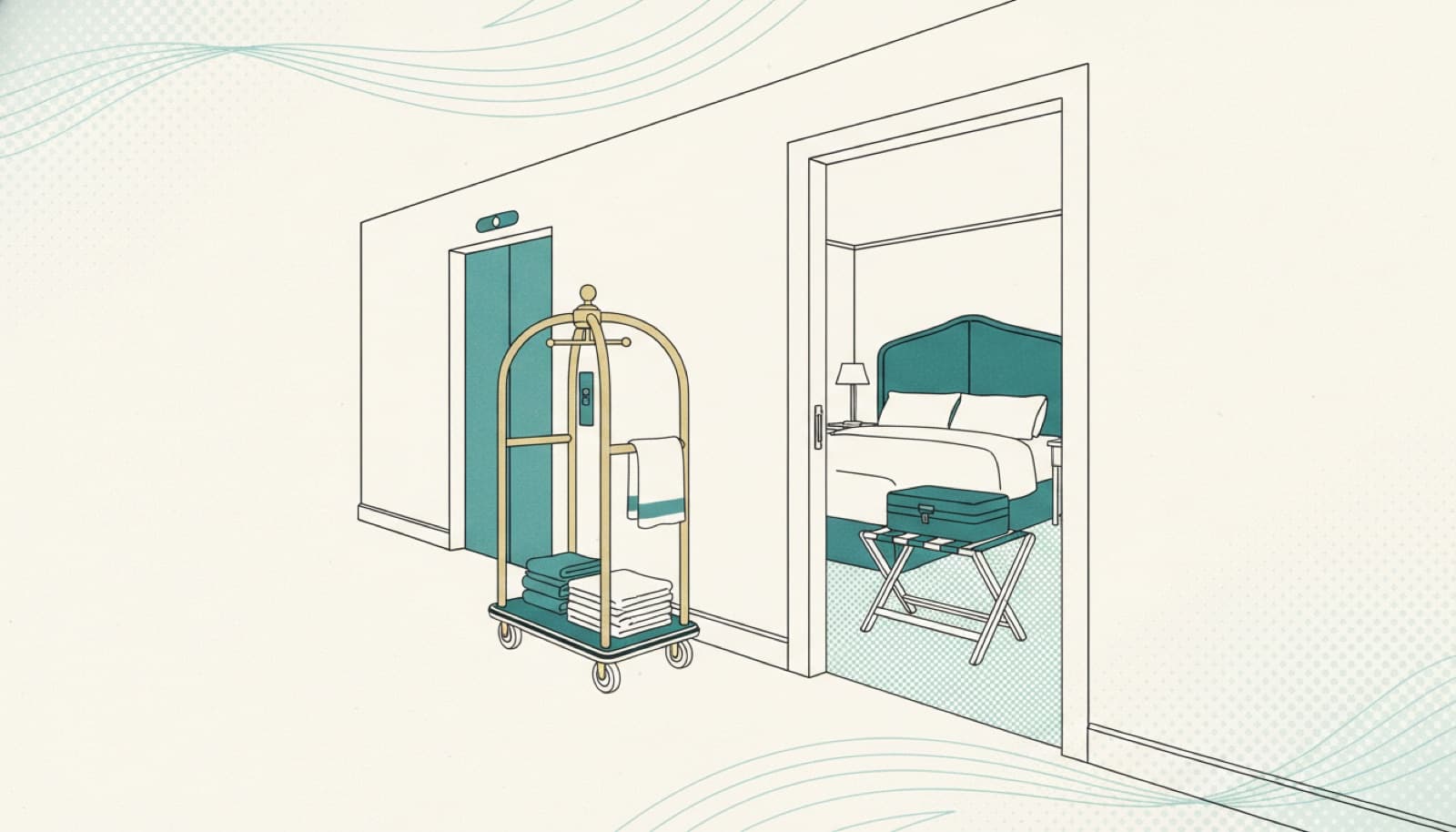
A hotel takes in suitcases from everywhere every day, and bed bugs travel in suitcases. Integrated pest management in hotels is how a property keeps that risk in hand: housekeeping routines, inspection and monitoring by a contractor and, in the right places, a treated surface.
What integrated pest management in hotels means
Integrated pest management, usually shortened to IPM, is a cycle rather than a product. Inspect and identify. Decide whether action is needed. Fix proofing and hygiene first. Monitor. Treat only where the evidence points, with the narrowest method that works. Record it, and review.
In a hotel, most of that cycle is carried by people who are not pest controllers. Housekeepers see every bed at every change. Maintenance staff see behind headboards and under fixed furniture. Reception hears from the guest who mentions bites. The contractor visits on a schedule, so the in-house routine decides how early a problem is noticed.
In Europe, the standard EN 16636 sets out requirements for professional pest management services, from assessing a site to carrying out the agreed control and prevention procedures. Asking a contractor whether they work to it is a reasonable first step.
Hotel pest management starts at room turnover
Bed bugs are the insect most hotel programmes are built around. They travel passively in luggage, clothing and furniture, hide in seams and joints close to where people sleep, and are easy to miss while their numbers are small.
That makes the room change the most useful inspection point a hotel has. Built into the routine, a check takes a minute or two and needs a torch rather than special equipment.
- Mattress piping, seams and tags, especially at the head end.
- The joints of the bed frame and the seam where the headboard meets the wall.
- The luggage rack: its frame, its webbing and the wall behind it.
- Upholstered chairs, under the cushions and along the seams.
- Skirting and carpet edges beside the bed.
Housekeepers look for small dark spots that smear when wiped, pale shed skins, tiny eggs and, less often, live insects. Bites are a poor guide: people react differently, and some do not react at all.
Maintenance adds the less frequent checks, such as lifting the headboard off the wall and looking under the box springs.
Luggage areas and shared routes
Suitcases do not stay in rooms. They wait in the luggage room, ride on the bell trolley, stand in the lobby and travel in the lift. In the luggage room, bags from many rooms sit side by side for hours.
A good plan maps these shared routes as carefully as the rooms: the shelving and floor edges of the luggage room, the frames of the trolleys, the racks in each room, and the linen and housekeeping carts that move from floor to floor.
Linen from a room under suspicion goes into a sealed bag before it leaves the room, and straight to the laundry, not onto the cart that serves the next room.
Where a repellent surface layer fits
A repellent surface layer belongs to the prevention part of the cycle, on the routes between where insects hide and where guests sleep or put down their bags.
It goes on mapped structural edges: bed frames and skirting, luggage racks, luggage room shelving and trolley frames. It is applied after the inspection, never instead of it, and while the room is out of service.
Keep it away from interceptors, monitors and bait points. A repellent next to a monitor can lower the catch and make the trend look better than the room is.
The cycle belongs on the housekeeping calendar, room by room, rather than on request.
Every application goes on the record: room or area, date, surfaces, product and batch, the person who applied it, and the time the room went back on sale.
When there is an active case
A guest report, a find at turnover or a catch on a monitor changes the order of things. The room comes out of service, the contractor inspects it, and the rooms on either side, above, below and across the corridor are checked as well.
Treating a confirmed case is the contractor's job, with the methods the case calls for. Many bed bug populations in Europe are resistant to pyrethroid insecticides, which is one reason a confirmed case rarely ends after one visit or one method.
A repellent layer is not part of that response. It comes back into the plan afterwards, once the contractor has signed the room off, on the edges and routes around it.
For the practical detail on surfaces, preparation, drying and records in hotel rooms, read the hospitality and camping guide in the Repeltec Professional library.
Use biocides safely. Always read the label and product information before use.