
Blog2026-10-02
Autumn cleaning checklist: the edges insects use
An autumn cleaning checklist for the edges insects use: skirting, thresholds, window frames, cellar steps and behind appliances, done over one weekend.
Repeltec
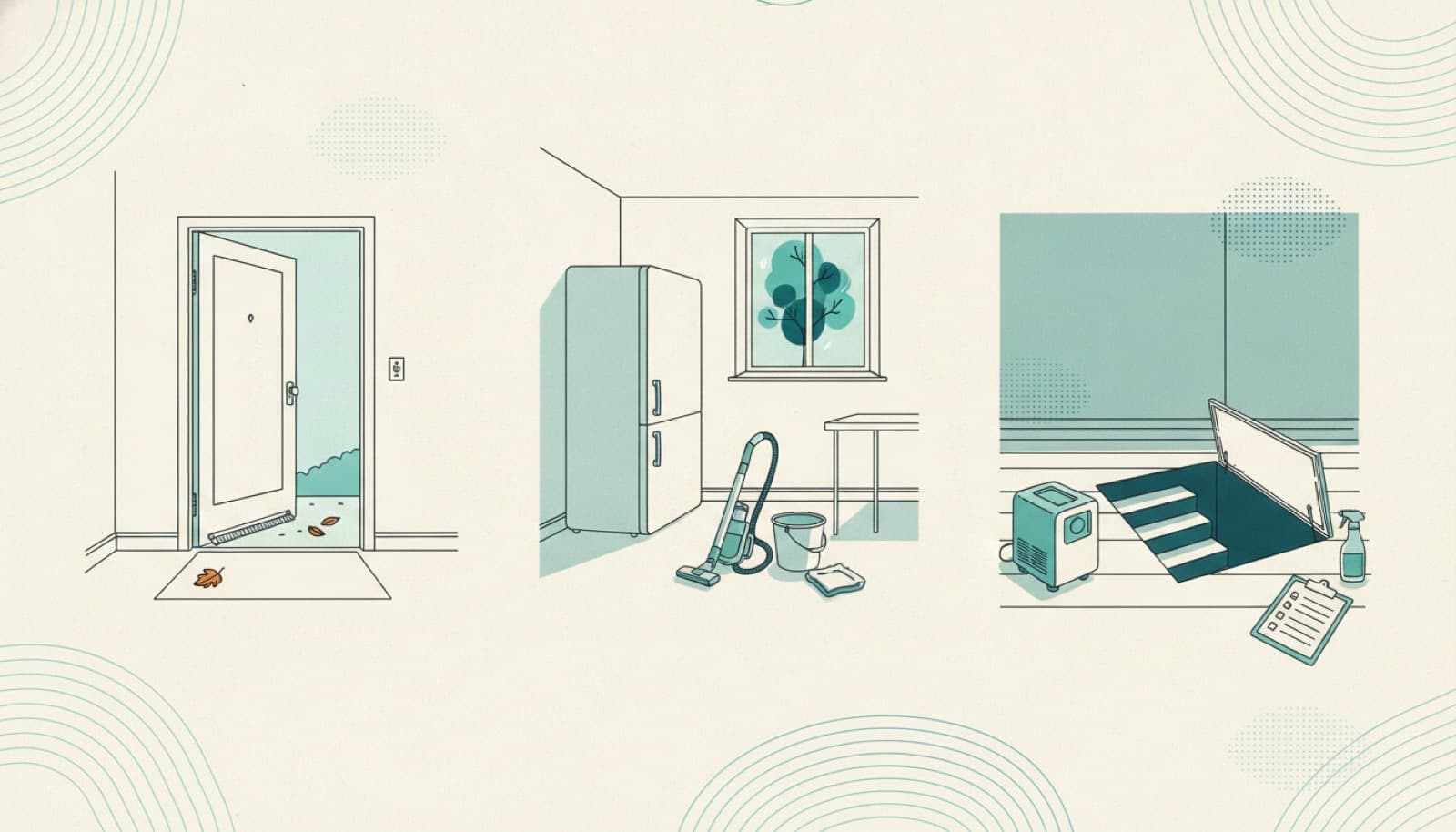
Autumn is when the house closes up for the year, and when insects from the garden start looking for somewhere dry to spend the winter. This autumn cleaning checklist covers the five edges they use most, with an order of work that fits into one weekend.
Why an autumn cleaning checklist starts at the edges
Crawling insects rarely cross the open middle of a room. Cockroaches and ants keep in contact with a surface and follow walls and edges, a habit biologists call thigmotaxis. A cockroach uses its antennae to hold a steady distance from a wall as it runs along it.
Edges also collect what those insects are looking for. Crumbs end up against the skirting, dust gathers behind the fridge, and damp settles at the foot of the cellar steps. An edge that is clean, dry and sealed gives them far less reason to stop.
Autumn adds traffic from outside. From late summer, cluster flies gather on the sun-warmed south and west walls of houses and work their way into cracks around windows and under the eaves to spend the winter. University extension services name sealing those gaps as the best way to keep them out.
The five edges on the list
Walk the house with a torch on Friday evening and write down where each of these edges is, room by room.
- Skirting boards: the joint between floor and wall in every room, and the corners where two runs meet.
- Door thresholds: the sill, the foot of the frame and the brush strip on every outside door, plus the doors to the cellar and the garage.
- Window frames: the joint between frame and sill, inside and out, starting with the sunny sides of the house.
- Cellar steps: the back edge of each tread, the joint with the wall, and the underside of the stairs where dust settles.
- Behind appliances: the floor and wall behind the fridge, the cooker, the dishwasher, the washing machine and the boiler.
Note anything that needs a repair while you are there: a gap behind the skirting, a worn brush strip on a door, a crack where a frame meets the plaster. Those go on Saturday afternoon.
The autumn cleaning order for one weekend
Work from the top of the house down, and from dry to wet. Dust falls onto floors you have not done yet, and you never vacuum a surface you have just washed.
Saturday morning is for clearing and vacuuming. Move boxes and baskets away from the walls, slide out the appliances that move easily, and run the crevice tool along every edge on your list. Leave anything plumbed or wired in place if moving it needs a tool, and clean as far behind it as you can reach.
Saturday afternoon is for washing and repairs. Wipe every edge with warm water and a little washing up liquid, which lifts grease and the scent trails ants follow. Then fill the gaps you noted with a flexible sealant and replace worn brush strips.
Before dark, go outside. Clear leaves away from the walls, cut back plants that touch the house, and check the seals around the outside doors and the cellar window.
Overnight, let everything dry with the heating on low and a window open a little. The cellar needs the most help here. Silverfish depend on humid air, so a damp cellar stays attractive to them even after a good clean; a dehumidifier, or airing on dry days, is the first step extension services recommend.
Sunday: treating the clean edges
Sunday is for the treatment, once every edge is clean and fully dry. Follow the same route as Saturday, from the top of the house down to the cellar steps.
Apply a thin, even layer along each edge, overlapping slightly so there is no gap in the line. Read the label before you start, keep the product off food preparation surfaces, and test a hidden spot first on untreated wood or stone.
Use the same bottle on every edge on your list rather than a different spray for each room.
Push the appliances back only when the floor behind them is dry, and leave the cellar door open while the steps dry. Follow the label on drying and ventilation.
Write the date next to each edge on your list. Mopping or scrubbing a treated edge removes the coating, so treat that edge again after a deep clean.
If one insect turns up more than the others while you clean, the Ants, Cockroaches, and Silverfish pages on repeltec.com show the edges to start with for each.
Use biocides safely. Always read the label and product information before use.