
Blog2026-08-12
PT19 vs PT18: repellents and insecticides under the BPR
PT19 vs PT18: why a repellent and an insecticide fall under different BPR product types, and what that means for labels, claims and sales in retail.
Affix Labs
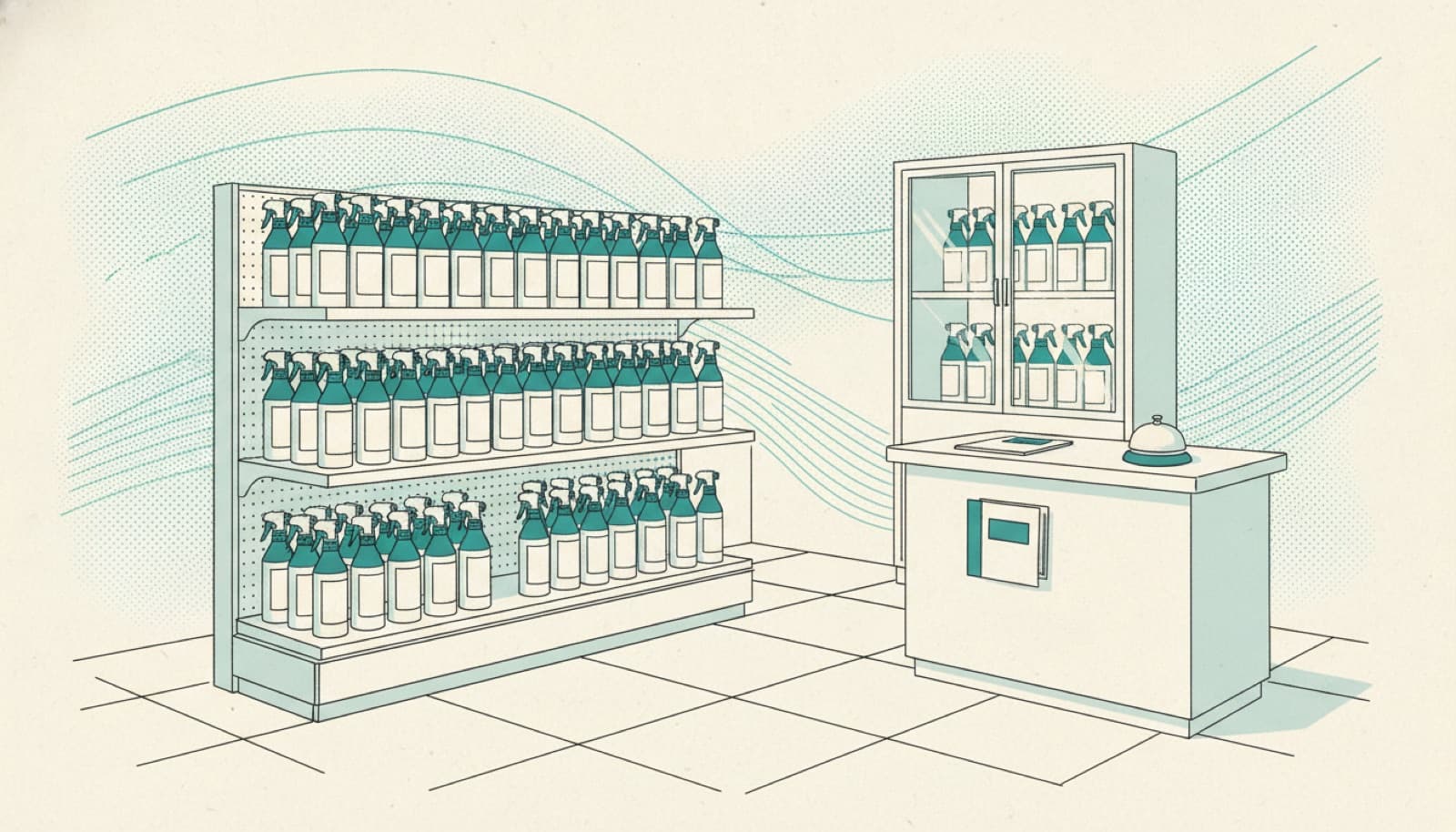
Repellents and insecticides often share a shelf, but under the EU Biocidal Products Regulation they belong to two different product types. This article explains PT19 vs PT18 and what the difference means for distributors and retailers who label, list and describe these products.
PT19 vs PT18: two product types in one group
The Biocidal Products Regulation (EU) No 528/2012, or BPR, sorts biocidal products into 22 product types in four main groups. PT18 and PT19 both sit in main group 3, pest control.
PT18 covers insecticides, acaricides and products to control other arthropods. The regulation describes them as products used to control arthropods, such as insects, arachnids and crustaceans, by means other than repulsion or attraction.
PT19 covers repellents and attractants. These are products that control harmful organisms by repelling or attracting them, including products for human or veterinary hygiene used directly on the skin or in the environment of people and animals.
So the line runs along the mode of action. An insecticide acts on the insect. A repellent acts on where the insect goes.
What decides the product type
The product type follows the function a product is meant to have, as set out on its label and in its claims. The pest on the pack does not decide it. A product aimed at mosquitoes can be a PT18 insecticide or a PT19 repellent, depending on what it is designed to do.
Active substances are approved per product type. An approval for PT19 covers repellents, not insecticides, and the reverse is true for PT18.
The European Commission ruled on one such case in 2016. A horse rug impregnated with permethrin to control nuisance insects was classed as a PT18 product. Because permethrin is not approved for PT19, the decision added that the rug should not be claimed to have any repellent function.
Where a product combines both functions, such as an insecticidal bait with an added attractant, authorities have authorised it under both product types, with each active substance approved for its role.
Labels and claims for PT19 and PT18 products
For a distributor or retailer, the product type sets the limits of every sentence on a shelf card, web shop listing or sales sheet. Article 69 of the BPR requires that labels are not misleading about a product's risks or its efficacy. Article 72 sets the same standard for advertising.
In practice that means describing each product as what it is. A PT19 repellent keeps insects away from a person, an animal or a treated surface. It should not be sold as something that clears an infestation or brings down the number of insects in a building.
The reverse also holds. A PT18 insecticide should not be presented as a repellent unless it is also covered for PT19, as the permethrin rug showed.
Article 72 also requires two set sentences in every advertisement for a biocidal product: one on using biocides with care, one on reading the label and product information before use. The word biocides may be replaced by a clear reference to the product type, such as repellents. The same article rules out descriptions such as low-risk biocidal product in any advertisement.
National rules that separate insecticides from repellents
Some member states add their own rules for insecticides. The two best known in retail do not apply to PT19 products.
In Germany, the Biozidrechts-Durchführungsverordnung (ChemBiozidDV) has banned self-service sales of PT18 insecticides since 1 January 2025. They have to be kept where buyers cannot help themselves, and a trained member of staff must discuss use, risks and alternatives with the buyer before the sale. Online sales need the same conversation, by phone or video. Products authorised under the simplified procedure are exempt, and PT19 is not on the list.
In France, advertising PT14 rodenticides and PT18 insecticides to the general public has been prohibited since 1 October 2019, and discounts, rebates and free units on these products are banned. Advertising aimed at professional users is still allowed. Products eligible for the simplified authorisation procedure are excluded, and PT19 repellents fall outside these rules.
A checklist for distributors and retailers
Before you list a repellent or an insecticide, check these points.
- The product type on the label, and whether every claim on the pack and in your own listing fits it.
- The active substance, and whether its supplier or the product supplier appears on the ECHA list under Article 95 for that product type. Since 1 September 2015, a biocidal product may only be made available in the EU if one of them does.
- The notification in each country. In France, a biocidal product is declared to ANSES before it is first made available, and the quantities placed on the market are declared every year. In Germany, a product sold under the transitional rules for existing active substances has to be notified to BAuA and carry the number it receives.
- The two mandatory sentences on shelf cards, web shop pages and brochures.
- For PT18 products, the German and French limits described above.
Repeltec, the surface treatment Affix Labs makes, is a repellent.
Distributors who want to add a repellent range will find the partnership terms on the Partners page. Retailers will find formats, display units and the trade pack on the Retail page.
Use biocides safely. Always read the label and product information before use.