
Blog2025-08-27
Insects in hospitals: a surface routine alongside hygiene
A hospital cannot close a ward for a fumigation. A preventive surface treatment, scheduled inside the cleaning programme, fits the way hospitals already work.
Tom Sam
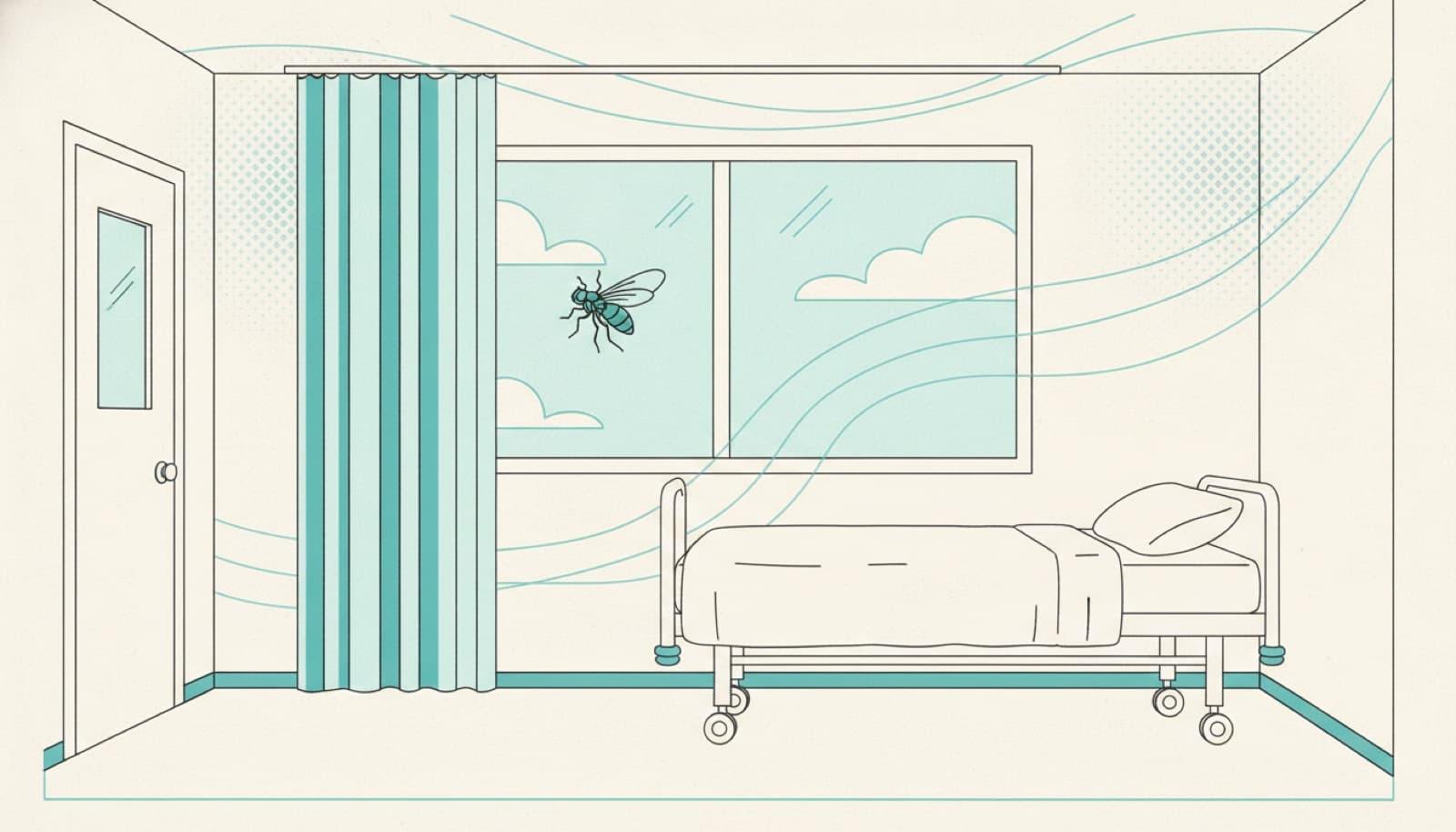
Hospitals run on hygiene routines, and insects are one of the things those routines have to manage. Flies, cockroaches, ants and bed bugs all find their way into healthcare buildings: through deliveries, through kitchens and waste areas, and in the luggage and clothing of patients and visitors.
Bed bugs deserve a separate mention. They arrive with people, and a hospital receives a constant flow of people. Once they are in a ward, getting rid of them takes repeated treatments and rooms out of service.
Why the usual methods are awkward in a hospital
Sprays and fogging act on what is there on the day. They often mean moving patients, closing rooms and airing them before they are used again, which is hard to arrange in a building that never closes. Repeated use of the same insecticides also feeds resistance in insect populations, so the same treatment works less well over time.
Traps and bait stations help with monitoring and with some species, but they do little about crawling insects that hide in bed frames, seams and gaps.
Where Repeltec fits
Repeltec is a preventive surface treatment.
It is applied to mapped edges and frames on a cycle, while a room is out of service, and the room is dried and aired before it is used again. That makes it a task for the cleaning or pest control schedule rather than an emergency intervention.
Areas to map
- Bed frames, the joints of bedside furniture and the skirting behind beds.
- Waiting areas: the frames and undersides of seating, and the floor to wall junction.
- Kitchens, cafeterias and food stores: structural surfaces and perimeters, away from food and food contact surfaces.
- Waste and delivery areas, where insects come in from outside.
- Ambulances and patient transport: the edges and joints of the interior.
Part of a programme, not a replacement
Integrated pest management puts prevention, monitoring and proofing first. A surface treatment sits alongside them. It does not replace monitoring, it does not replace sealing the gaps, and it does not clear an infestation that is already established. When there is one, the pest control contractor deals with it first, and the treatment holds the ground between visits.
Record every treatment: the area, the date, the product and who applied it.
Use biocides safely. Always read the label and product information before use.