
Blog2025-08-27
Airports and insects: treating the edges of a building that never closes
An airport cannot shut a terminal for pest control. Treating the routes insects use, on a cycle, fits around operations instead of interrupting them.
Tom Sam
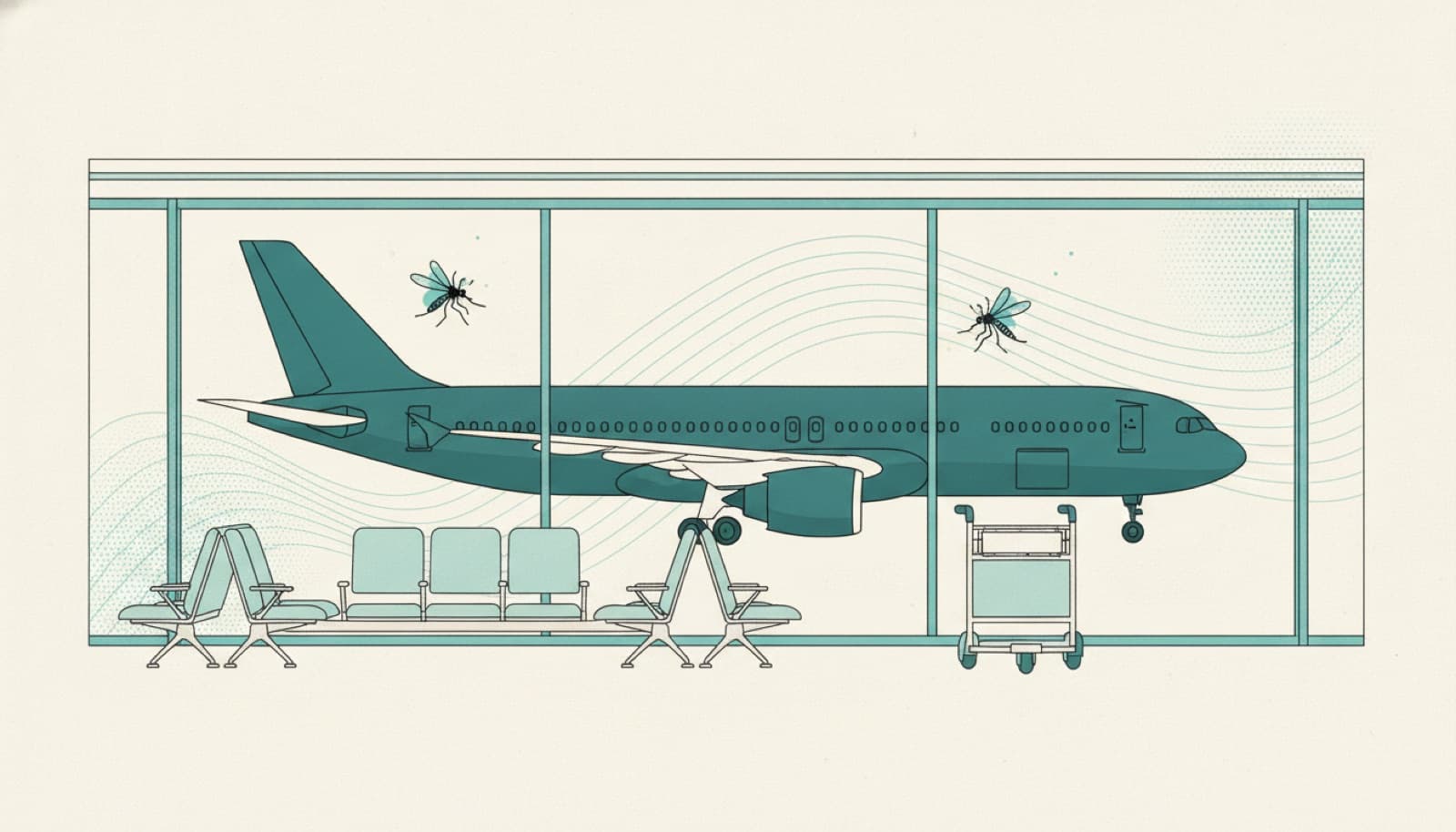
Airports move people, luggage and cargo from everywhere, all day and all night, and insects travel with them. Bed bugs ride in suitcases, cockroaches and flies follow the food courts and the waste, and cargo from warmer climates brings its own passengers.
Why airports are hard
- High turnover and global exposure: every arrival is a possible introduction.
- Many kinds of space in one building: food courts, lounges, restrooms, baggage halls and cargo sheds, each with its own pests.
- Food service and public seating limit what can be sprayed, and where.
- No downtime: treatments that need closures or long re-entry times are hard to schedule.
A preventive routine instead of a reaction
Repeltec is a surface treatment for the edges and frames insects use to move and rest.
Because it is applied to mapped surfaces on a cycle, it can be planned into night shifts and quiet periods, area by area, with each zone released once the surfaces are dry.
Areas worth mapping
- Gate and lounge seating: frames, joints and undersides.
- Baggage claim and handling: the structure around carousels and storage racks.
- Food courts: structural surfaces, perimeters and the space behind counters, away from food and food contact surfaces.
- Restrooms: floor to wall junctions, partitions and service ducts.
- Cargo and storage areas: walls, racking and door thresholds.
Alongside monitoring and proofing
None of this replaces the airport's pest control contract. Monitoring shows where the activity is, proofing closes the gaps, and the contractor deals with any established infestation. A treated edge holds the route between visits.
In busy areas that are wet cleaned often, plan a shorter cycle and treat again after a deep clean.
Use biocides safely. Always read the label and product information before use.