
Blog2025-08-18
The impact of insecticides on soil health
Soil is rarely the first thing that comes to mind in insect control. It should be closer to the front.
Tom Sam
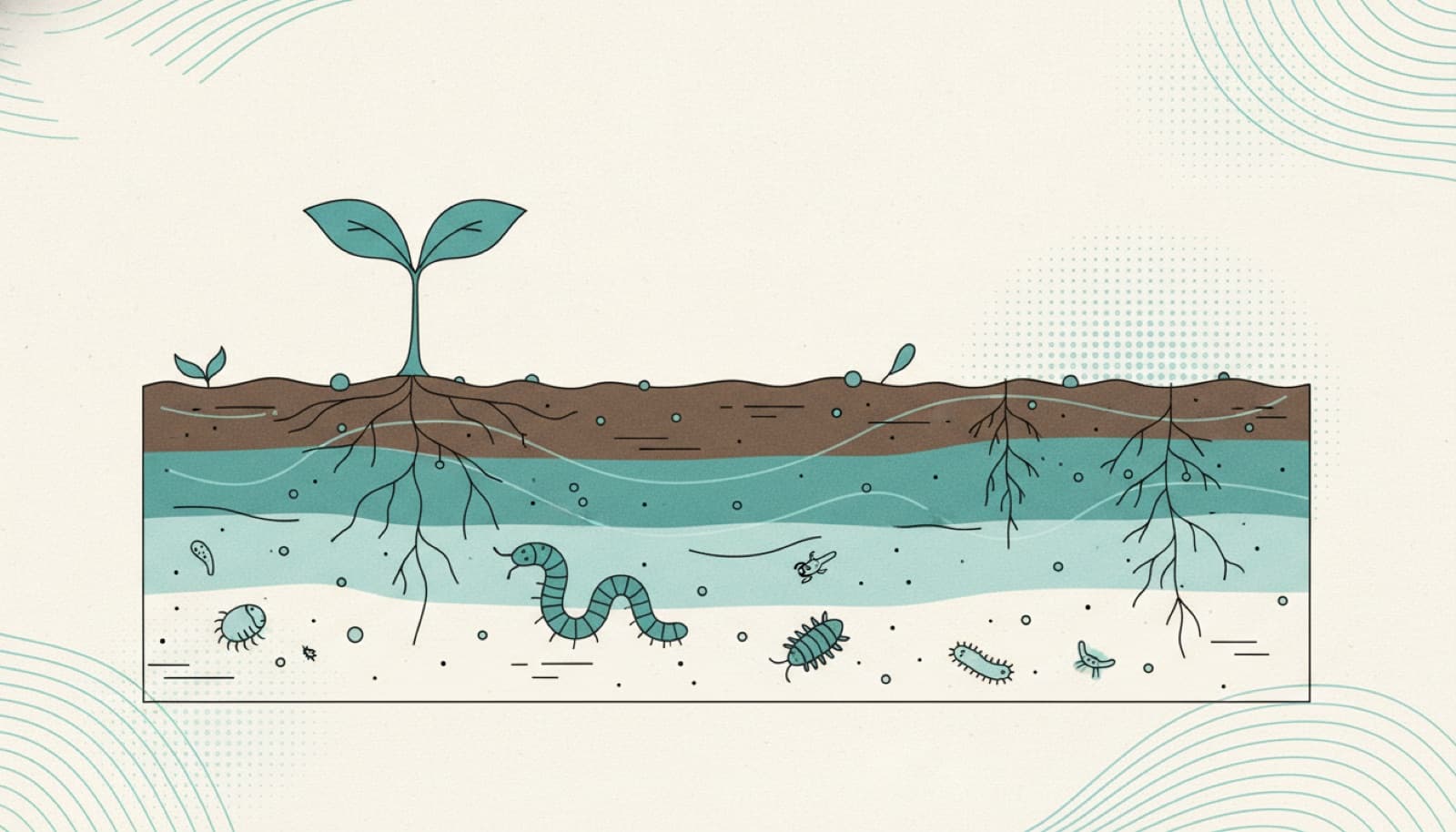
Soil is rarely the first thing that comes to mind in insect control. Most of us think about keeping mosquitoes off our skin or cockroaches out of the kitchen. But beneath our feet is one of the most complex ecosystems on the planet, and it is in trouble.
Soil is more than dirt. It is a living system of bacteria, fungi, insects and other organisms that keep food growing, water clean and ecosystems in balance. In recent years, soil scientists and ecologists have raised a flag about a quiet crisis underground: the degradation of soil health. One of the culprits is conventional insecticide.
Many of the insect-killing chemicals used in homes, on farms and in public spaces do not stop at the target insect. They move into the ground and affect the organisms that make soil work. Over time that chemical load disrupts soil food webs, reduces biodiversity and weakens agriculture and climate resilience.
The living soil
Soil is easy to overlook. It is everywhere, under pavements, fields, forests and gardens, and it does not draw attention to itself. But a single teaspoon of healthy soil can hold around a billion microorganisms. That is not a fun fact; it is a foundation of life.
Those microorganisms, together with beetles, ants and earthworms, decompose organic matter, cycle nutrients, build soil structure and hold ecosystems in balance. Without them plants struggle, water drains badly, and carbon that would normally stay in the ground is released to the atmosphere.
Healthy soil supports agriculture, filters pollutants, stores water and houses biodiversity. Many soil organisms also suppress harmful bacteria and pathogens. When the underground network thrives, everything above it benefits: crops, forests, whole ecosystems.
That balance is fragile. Soil is vulnerable to compaction, erosion and contamination, and one of the biggest threats to it is chemical exposure, particularly pesticides and insecticides applied to crops, gardens and surfaces with little thought for where they end up. Preserving soil biodiversity is now a priority for scientists and sustainable farming advocates worldwide. Long-term food security, water supply and environmental health depend on it.
How insecticides harm soil
Conventional insecticides are designed to kill, and they rarely stay where they are put. They spread into the air, into water and, crucially, into the soil.
Pyrethroids are the common example. Widely used in agriculture and household pest control, they are effective against a wide range of insects and they persist in the environment, especially in soil, where they can stay active for weeks or months. During that time they kill or disrupt non-target organisms that are essential to soil function.
Earthworms, the engineers of the soil, are especially vulnerable. Exposure to some insecticides impairs their movement, reduces reproduction or kills them outright. The same applies to ground beetles, ants and predatory mites, all of which play roles in pest control, nutrient cycling and aeration. Even the bacteria and fungi that break down organic matter are thrown off balance by toxic residues.
The disruption accumulates. Soil exposed to repeated chemical treatment becomes less diverse and less resilient. It compacts more easily, loses structure, and stores carbon and filters water less well. On farms that means more fertiliser to grow the same crop, which compounds the environmental cost.
Many common insecticides are also hydrophobic: they cling to organic matter and resist breakdown by water, so they accumulate in the topsoil, exactly where microbial and insect activity is densest. A few surface sprays can have long underground consequences.
None of this is inevitable. The key is pest control that is selective and does not rely on blanket toxicity to do its job.
Repelling instead of killing
That is the question at the heart of Repeltec. Nothing has to die for the treatment to work, and there is no dead insect to clean up.
The formulation is water-based. Because the coating stays on the surface it was applied to and releases its active gradually, the amount of active substance used over a season is small next to a spray that is reapplied again and again.
From a soil perspective the shift is from “kill everything and hope” to “repel what is necessary and leave the rest alone”. Repeltec fits into Integrated Pest Management programmes, which put prevention and targeted intervention ahead of broad-spectrum chemicals, as one tool among several.
Healthy soil, healthy future
When we think about protecting the environment we tend to look up: clean air, blue skies, green canopies. Some of the most important changes start below ground. Soil is the quiet foundation of life on Earth and it deserves more respect than it gets.
Conventional insecticides offer short-term relief with long-term consequences for the living systems under our feet. From earthworms to microbes, that ecosystem underpins food production and climate stability. Polluting it undercuts our own future.
If we want healthy crops, clean water and a stable climate, we need to think harder about what goes into the soil, and what we keep out of it.
Use biocides safely. Always read the label and product information before use.