
Food production and catering environments
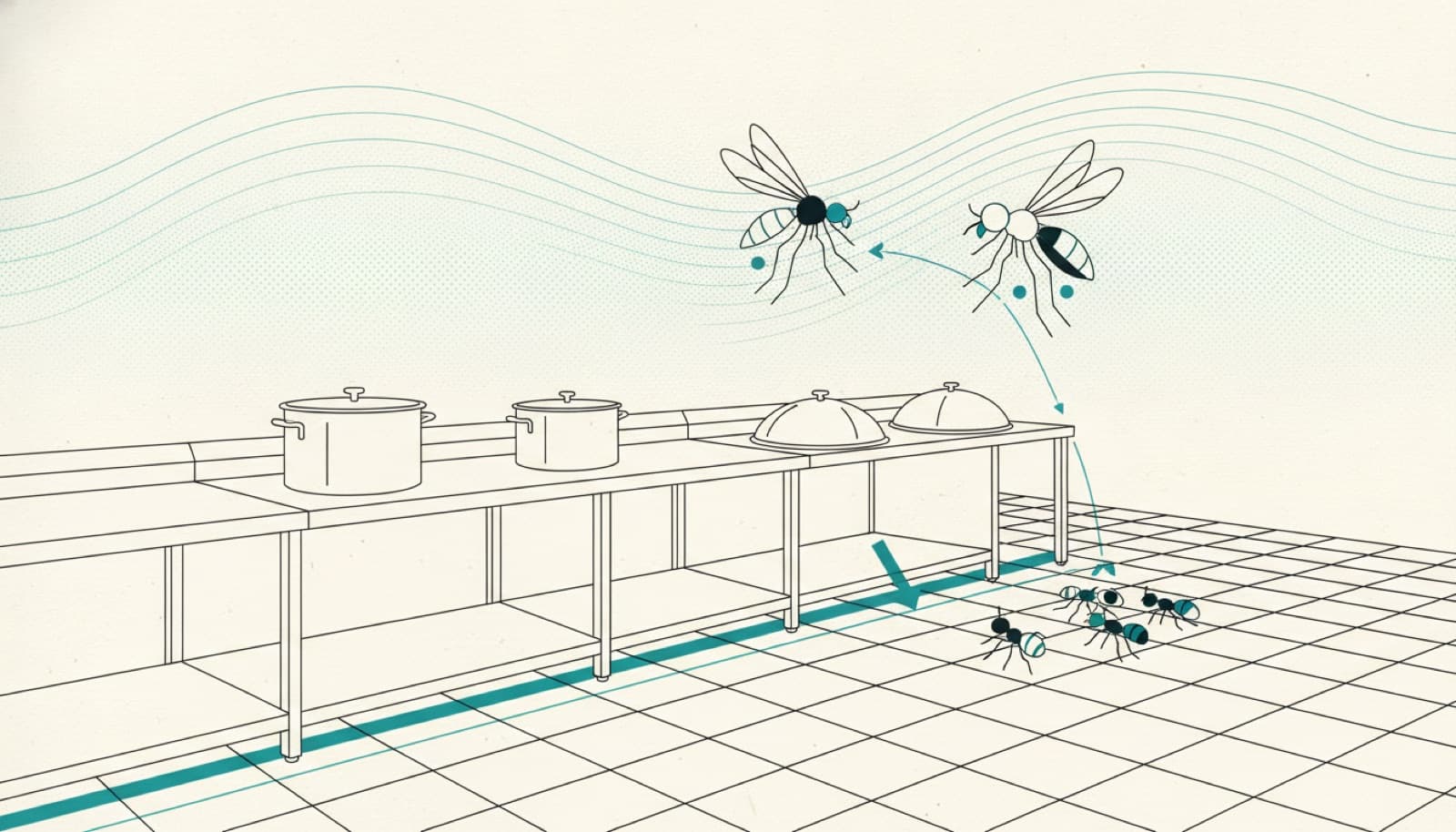
Floor-wall junctions, drains and equipment surrounds, treated inside the cleaning schedule, kept clear of the bait and monitoring plan, and recorded for the pest control and HACCP files.
Reviewed by the regulatory lead before publication.
01
Where it applies
Food sites run pest management to a documented, risk-based programme: a competent contractor or trained in-house team, a site plan of bait and monitoring points, inspection at a frequency set by risk assessment, trend analysis and an in-depth survey at least once a year. That is what BRCGS and IFS auditors look for.
Repeltec is one treatment inside that programme, applied to structural surfaces on the routes between harbourage and the production area. It does not replace the monitoring points, the bait plan, proofing or hygiene, and it must be in the contractor's scope of service or the site's own procedure before it is used.
Where it goes: floor-wall junctions and coving in preparation and production areas, equipment plinths and legs, the surround of drains and gullies (not into them), service voids and pipe runs, dry goods stores and racking uprights, waste and bin rooms, delivery doors, strip curtain frames and thresholds, staff changing and rest areas.
Not on food contact surfaces, open food or packaging, not on bait stations, insect light traps or monitoring devices or the surfaces they are mounted on, and not into a drain. The label decides which surfaces are in scope and the HACCP plan decides when the work can happen. Where the two disagree, stop and ask the technical manager.
02
Preparation
Agree the treatment with the technical or quality manager and write it into the cleaning schedule and the pest control procedure rather than running it as a one-off. Mark the treated zones on the site plan next to the bait and monitoring points, with a clear margin around each point.
Production is down, food and packaging are removed or covered, and the area has been cleaned down and dried. Raise any proofing or hygiene defects you find on the way (door seals, gaps behind equipment, debris under plinths) in the report; treatment does not close a gap.
Ventilate. Wear the protective equipment the safety data sheet specifies. Have the label and the safety data sheet with you, and make sure the product is on the site's approved chemical list.
03
Application
A thin, even layer along the perimeter: the floor-wall junction, the plinth edge, the door threshold, the frame of the strip curtain. Treat cracks and crevices deliberately; the route between the harbourage and the food is what you are trying to break.
Tested surfaces you will meet here: ceramic tiles, unpainted cement, galvanised iron, glass and plexiglass. Stainless steel, resin floors and painted walls are outside the tested list: spot test and record it.
Around drains, treat the surround and stop at the grate. Do not saturate: pooled product on a food area floor is a cleaning problem you have just created.
04
Drying and re-entry
Nothing restarts until treated surfaces are dry and the responsible person has released the area. Ventilate throughout. Record the release in the cleaning log with a time, the same way a chemical clean-down is signed off.
05
Reapplication
Reapply at the interval on the label. Sooner where an edge is wet cleaned daily with detergent, because the clean takes the coating with the soil.
In most plants the practical answer is to tie the treatment to the deep clean cycle, so the reapplication and the clean that removes it are on one calendar. Review the zones with the monitoring trend at each service visit and at the annual survey.
06
Records to keep
Area and plan reference, date and time, surfaces treated, product and batch number, quantity, applicator, release time and who released it, and the bait and monitoring points next to the treated zone.
Keep it where an auditor will look: in the pest control file, cross-referenced from the chemical file and the cleaning log, with the safety data sheet. A treatment that is not written down did not happen.
Do not say
What not to claim to the end customer
Do not tell a customer or an auditor that the site is insect free, or that food is protected. Do not present the product as approved for food contact; it is applied to the surfaces named on the label, away from food.
Do not present it as a replacement for the pest control contract, the monitoring plan or proofing.
Do not describe it as non-toxic or harmless.
Say what it is: a repellent surface treatment applied to perimeter and structural surfaces inside the cleaning schedule, kept clear of bait and monitoring points, dried and released before production restarts, and recorded in the pest control file.
Use biocides safely. Always read the label and product information before use.